


Walk into almost any early childhood program right now and you will hear a familiar concern:
“Challenging behaviors are increasing.”
“Children cannot sustain attention.”
“Teachers are overwhelmed.”
It is real. It is felt deeply. And it is not something to dismiss. But what if we are asking the wrong question? What if the challenge is not the child’s behavior… but how we understand it?
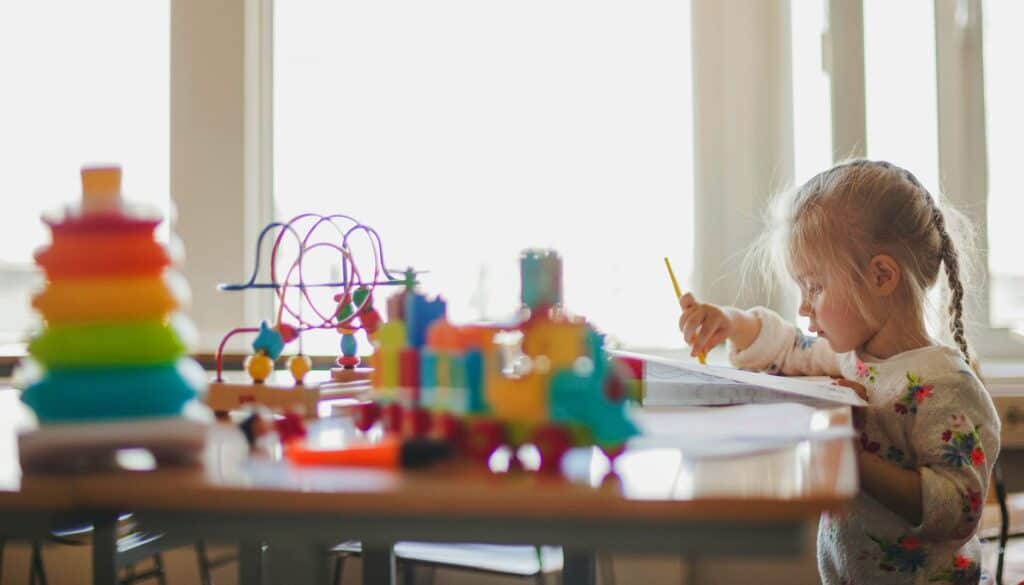
A Shift That Changes Everything
We often talk about “challenging behavior” as if it lives inside the child. As if it is something they bring with them, something they choose, something they control.
But many children today are navigating experiences that shape how they show up in the classroom:
- Stressful or unstable living conditions
- Exposure to trauma or chronic stress
- Neurodiversity that affects attention, impulse control, or sensory processing
- Limited opportunities for co-regulation and responsive interactions
When we look through this lens, behavior starts to look less like defiance and more like communication.
A child who cannot sit still may not be refusing.
A child who interrupts may not be seeking attention in the way we think.
A child who “does not listen” may not yet have the internal capacity to do so.
Perhaps this is not about lowering expectations, but about understanding what skills are still developing.
The Real Challenge
Here is the honest truth that many educators quietly carry:
The behavior is not just challenging for the child.
It is challenging for the adults.
- It challenges patience.
- It challenges expectations.
- It challenges the flow of the classroom.
- It challenges a teacher’s sense of effectiveness.
And when teachers feel challenged, it is human to look for a cause. Often, that cause becomes the child.
But what if we reframed this? What if instead of asking, “Why is this child behaving this way?”
We asked, “What is this situation asking of the adult?”
From Control to Support
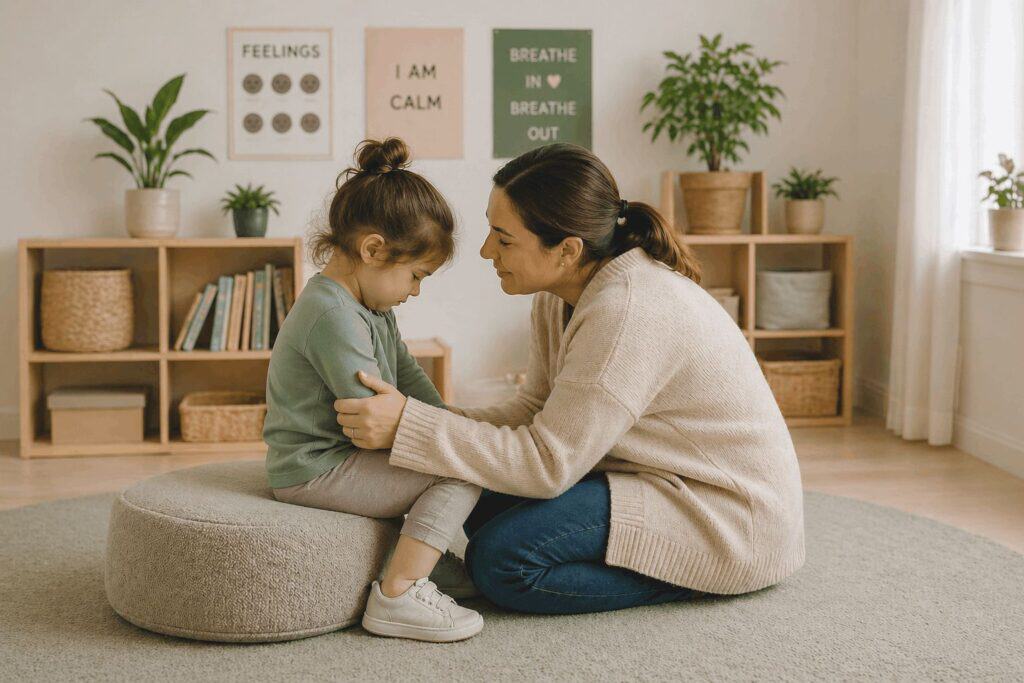
Children do not learn self-regulation in isolation. They learn it through relationships; this means that what we do as educators matters more than we sometimes realize. Instead of focusing on stopping behavior, we can focus on supporting development:
- Co-regulation before self-regulation
Children borrow calm from adults before they can create it on their own. - Structure that supports attention
Shorter segments, clear transitions, and movement can make a big difference for children struggling to sustain focus. - Language that teaches, not corrects
Instead of “Stop that,” we can model what to do. “Let’s try this together.” - Observation before reaction
What happened right before the behavior? What might the child be needing? - Consistency and predictability
These are not just classroom management tools. They are emotional anchors.
A More Compassionate Lens
This is not about removing accountability; it is about placing responsibility where it can actually create change. Young children are still learning how to be in the world and educators are the guides in that process.
When we shift from blame to understanding, something powerful happens:
- Teachers feel more capable
- Classrooms feel more peaceful
- Children feel more supported
- Learning becomes more accessible
In conclusion, maybe “challenging behavior” is not the right phrase. Maybe what we are really seeing is:
- Unmet needs
- Emerging skills
- Nervous systems asking for support
- Environments that need adjusting
And maybe the question is not how to fix the child. Maybe the question is how we, as educators and leaders, can respond in a way that helps children grow into the skills they are still developing.
Because when we change the way we see behavior, we change the way we respond to it.
And that is where real transformation begins.
If this resonates with you and your team, this is exactly the kind of work we love to explore together at ChildrenFlow. Supporting educators in understanding behavior through a developmental and relational lens can make a meaningful difference for both teachers and children.
And honestly, it brings back a sense of possibility into the classroom.